
Book “Color Chemistry: How Hair Dyes Work”
Scientific and practical textbook on dye chemistry, lightening, pH, direct pigments and color correction for hair professionals.
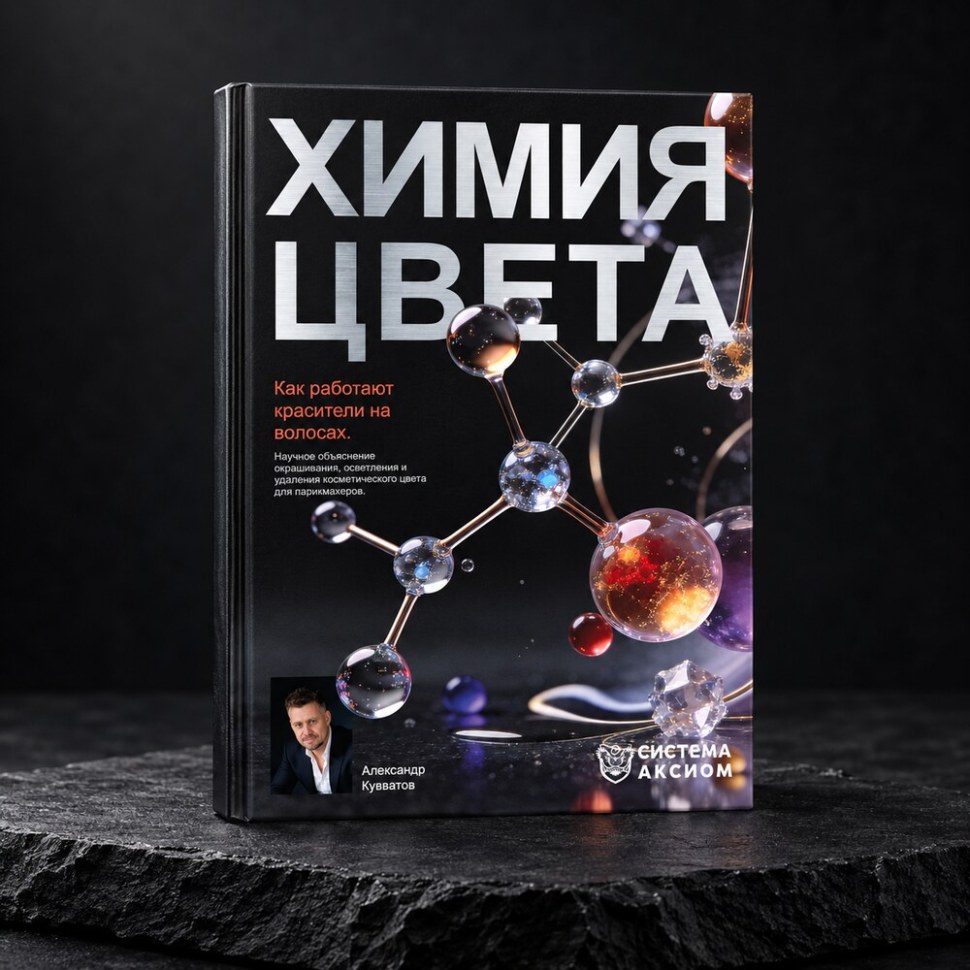
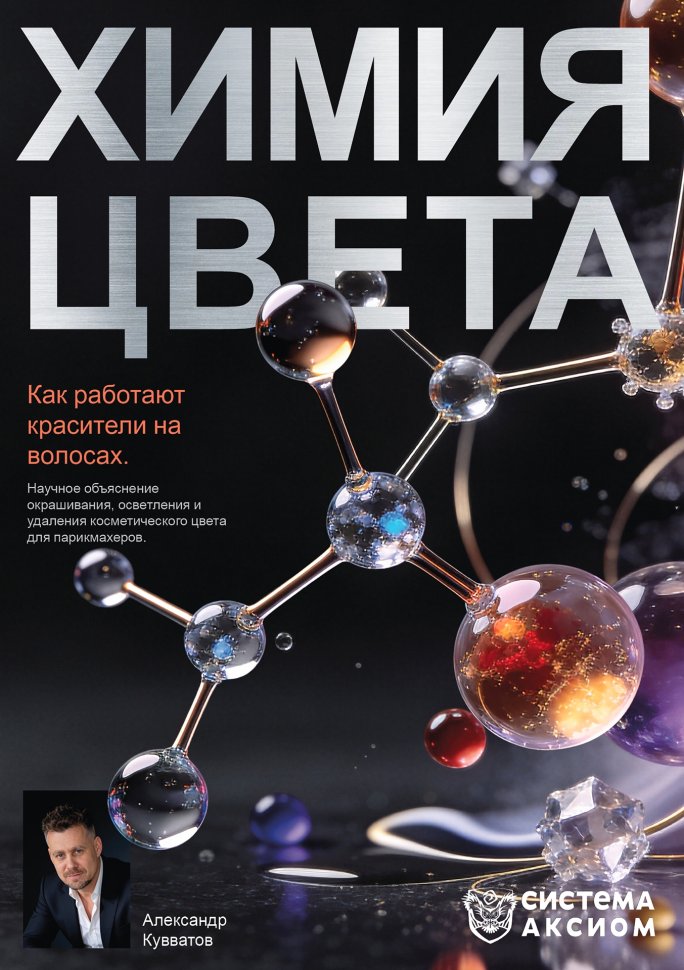
Net Weight | 800 g |
Product Dimensions | 260 x 160 x 30 mm |
Author | Alexander Kuvvatov |
Publishing | I.P. Kuvatov A.S. |
Date issued | 2022 |
Language | Russian |
Number of pages | 330 |
Type of publication | Bookinistic publication |
Pictures | Black and white |
Manufacturer | IP Kuvvatov Alexander Sergeievich |
Book Format | A5 |
Type of brook | BCF |
Brand-reference | None |
Special conditions | Only for professionals. |
Book “Color Chemistry: How Hair Dyes Work”
Scientific and practical textbook on dye chemistry, lightening, pH, direct pigments and color correction for hair professionals.
"Chemia of Color: How the Hair hair color Work" ====Career=============Career=======================Chart========================================================================================================))===============))==============================)))))))===================================================================)))))))))))))))))))))))))))))))))))))))))))))))))))))))))))))))))))))))))))))))))))))))))))))))))))))))))))
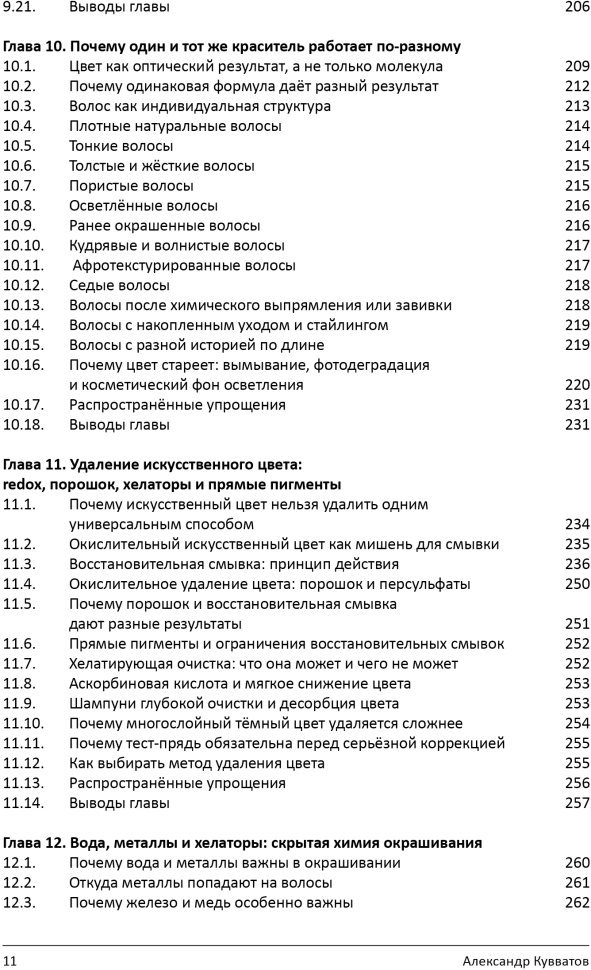
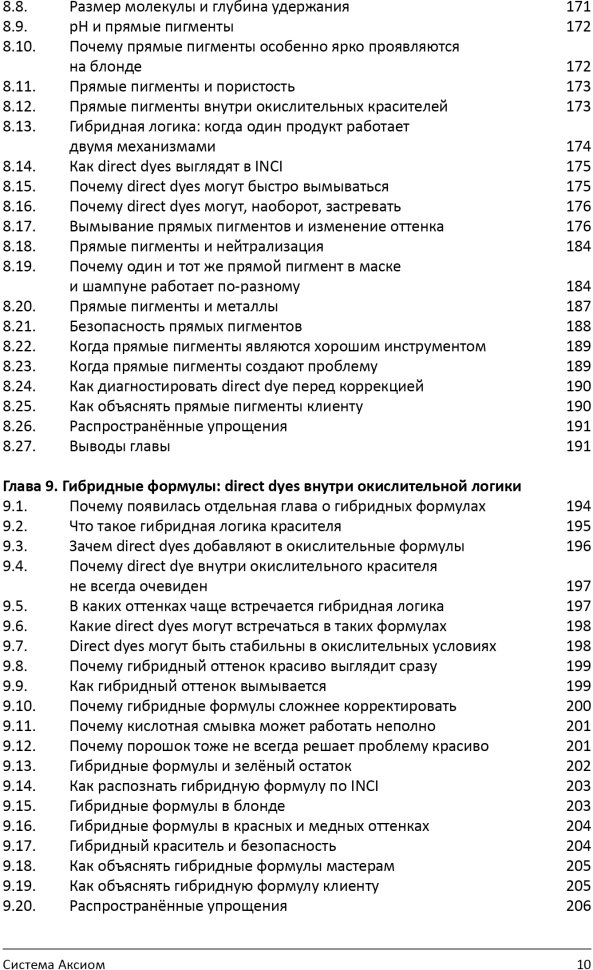
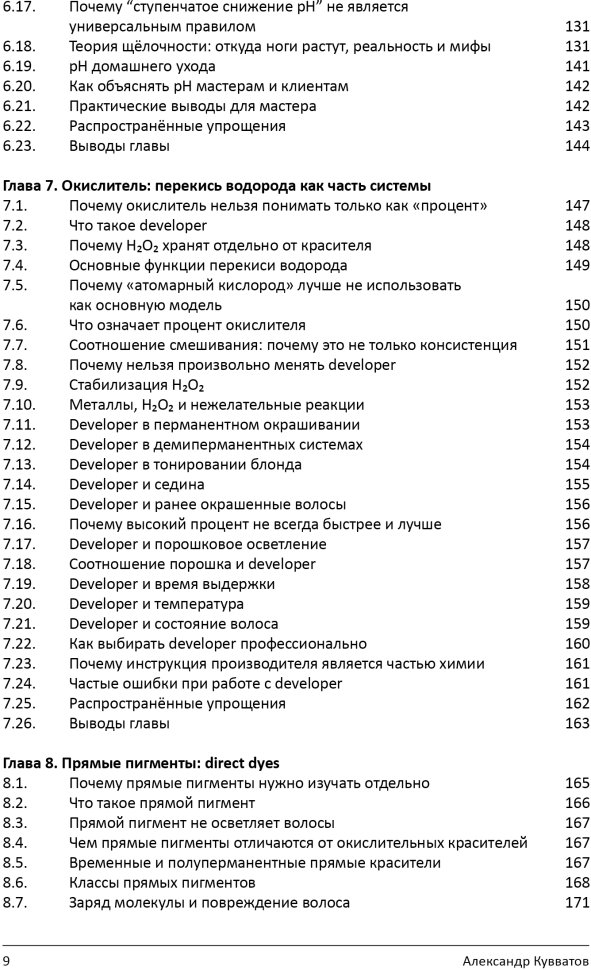
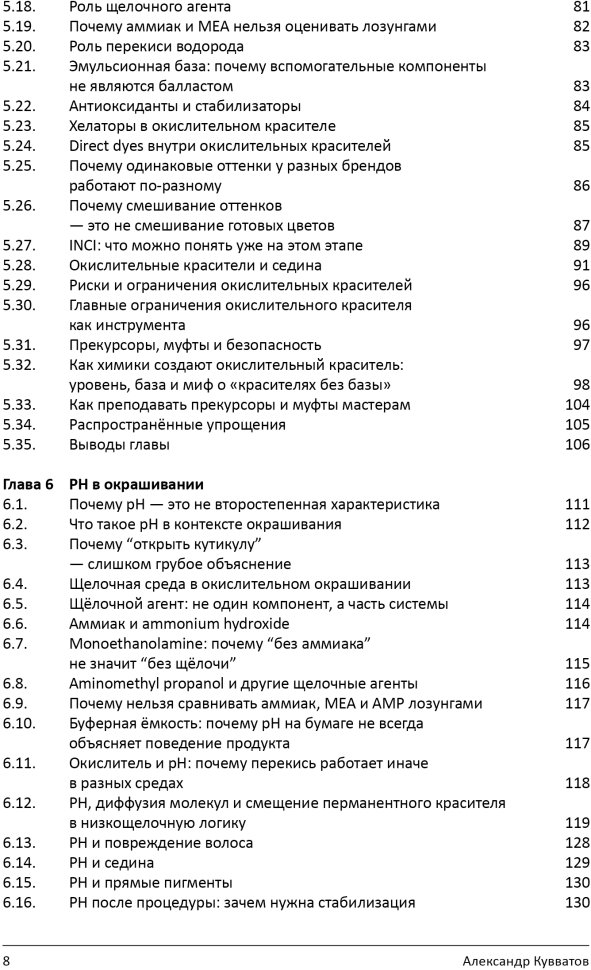
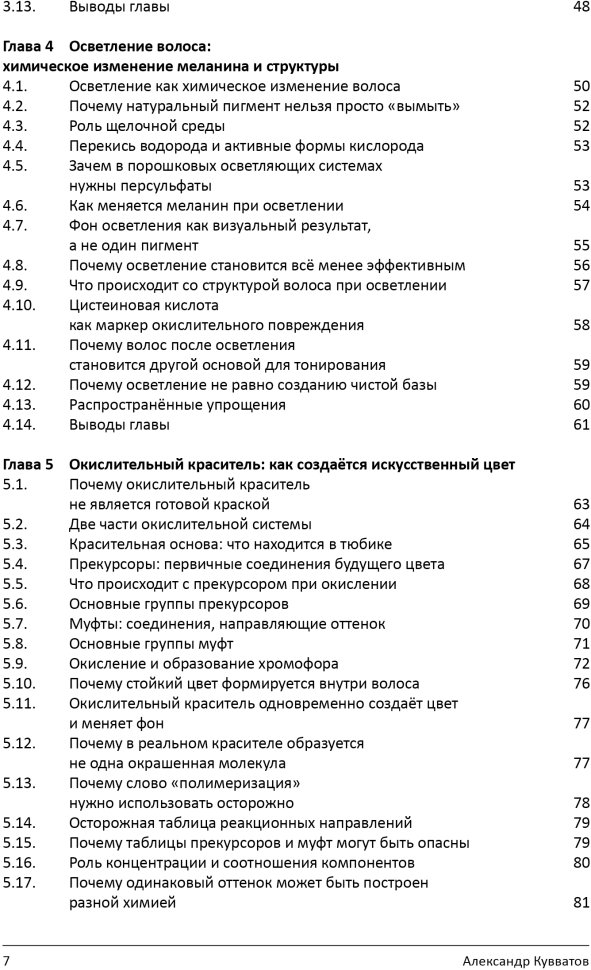
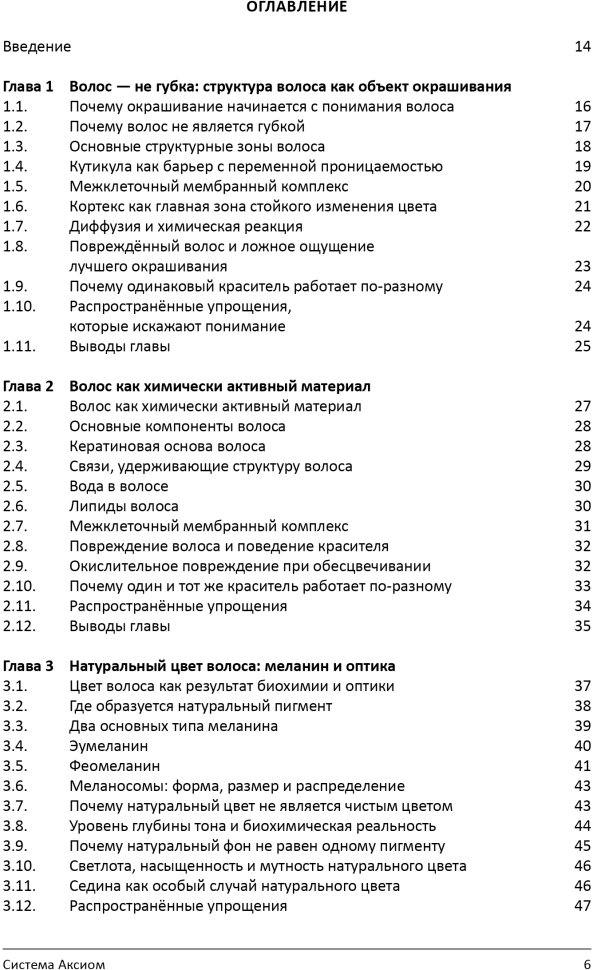
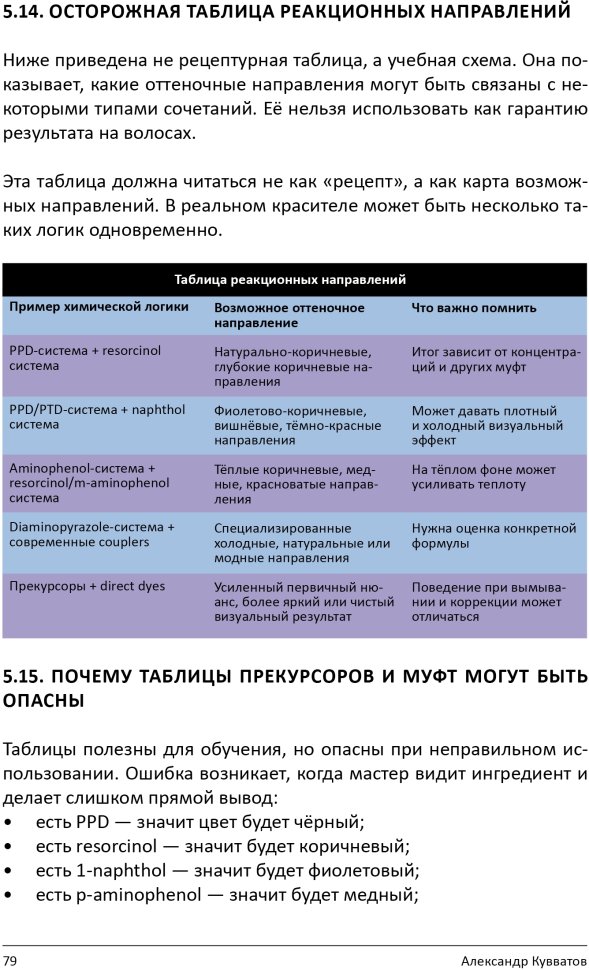
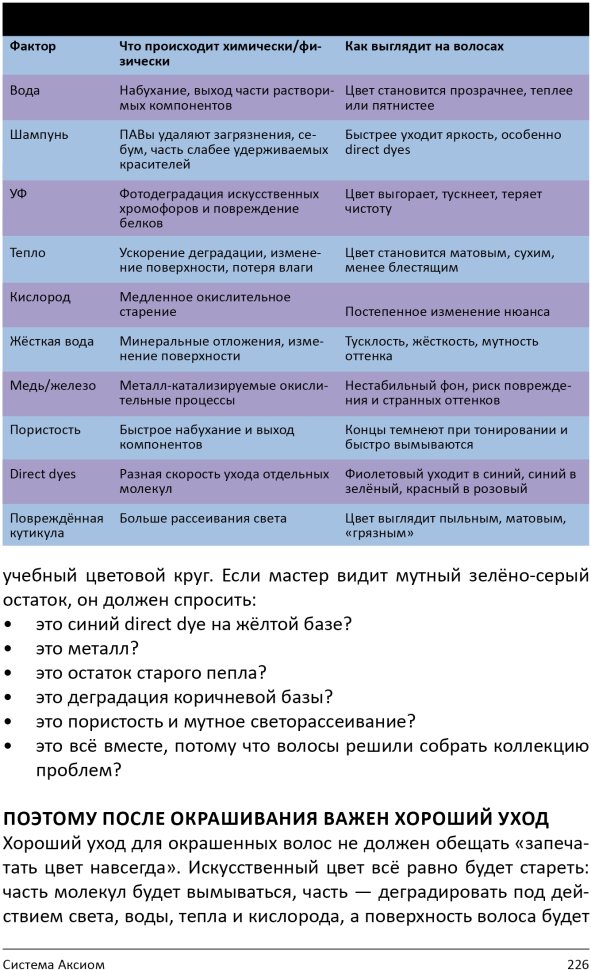
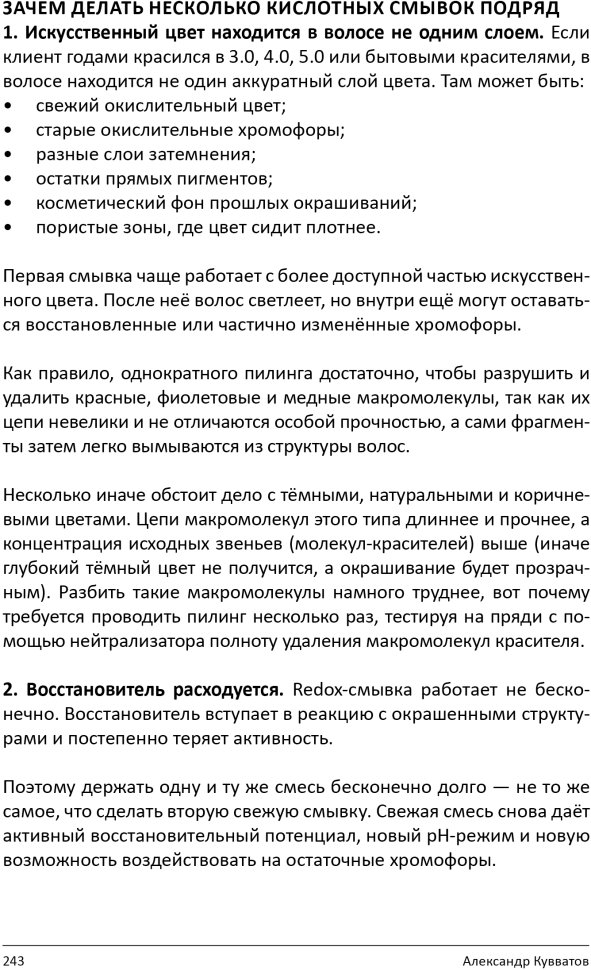
This book helps to understand why the same dye on different hairs produces different results, why color goes into heat, prune or mud, why lightening doesn't always create a clean base, why direct pigments can get stuck in hair, and the retreading flushes don't work as a universal "power" for any color.
What is this book about?
The textbook explains hair coloring as a chemical and optical process.
– hair structure as a material of coloring;
- cuticula, cortex, CMC, lipids and keratin hair base;
- natural hair color, eumelanin, pheomelanin and background light;
– Lightning chemistry and melanine change;
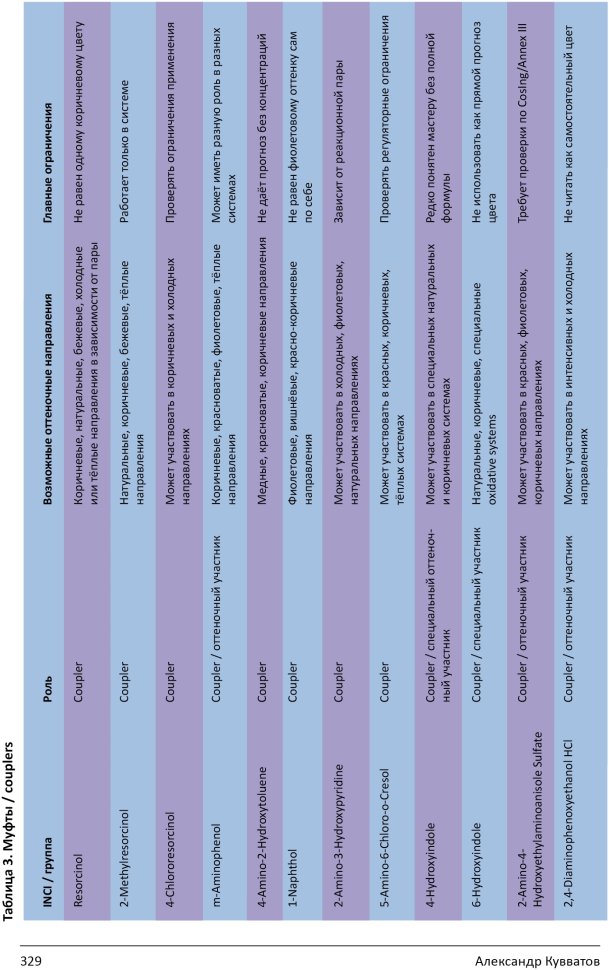
- Oxidation dyes, precursors and muftes;
– Artificial color formation within the hair;
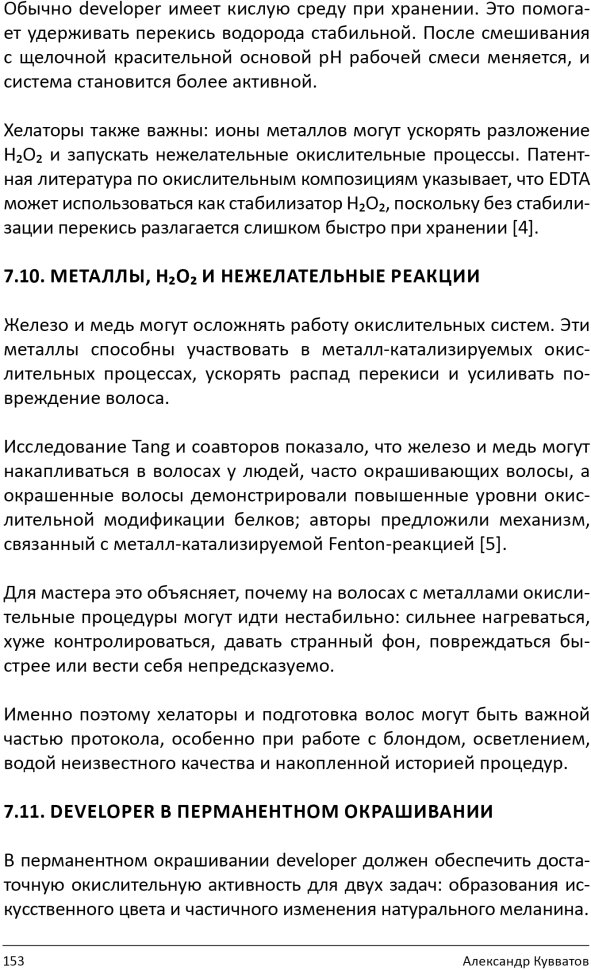
- Role of the developer, hydrogen peroxide and alkaline media;
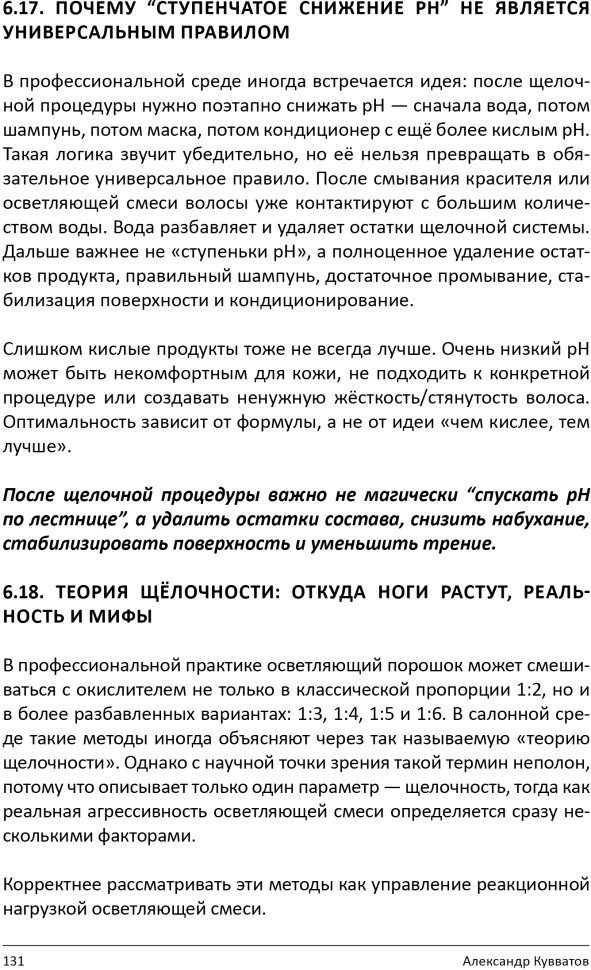
– The effect of pH on coloring, diffusion and color endurance;
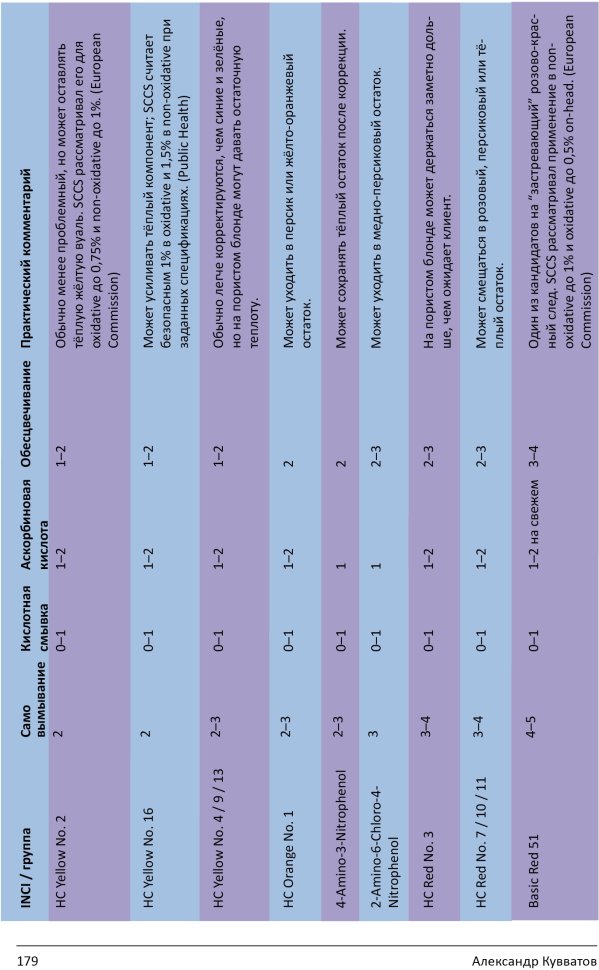
- direct pigments and their behavior on the porous hair;
- hybrid formulas with direct dies inside developers;
- the reasons why the same formula works differently;
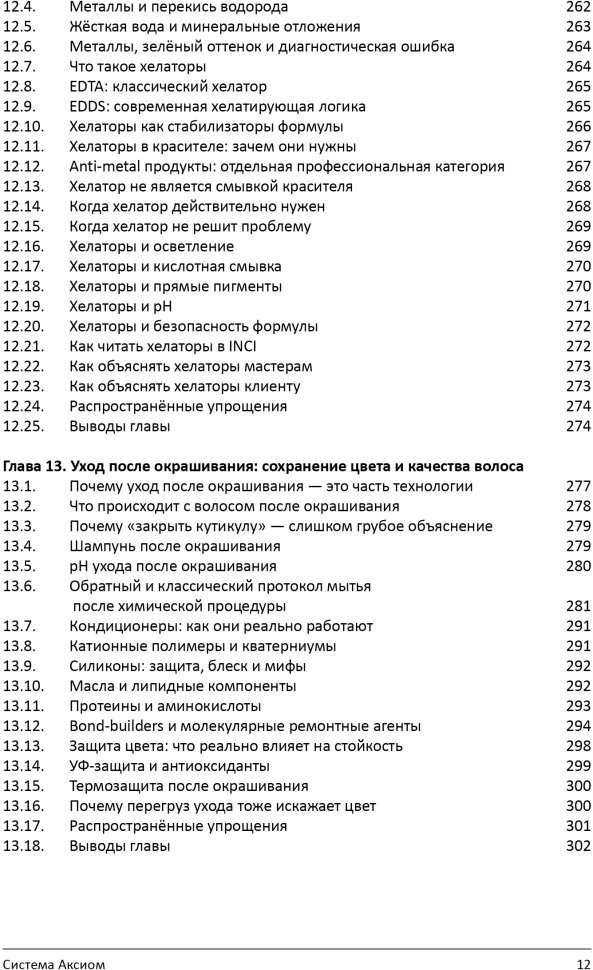
- Remedial flushing, redox reactions, powder and chelators;
- water, metals and their effects on the result of the staining;
– Post-coloring care, color preservation and hair quality;
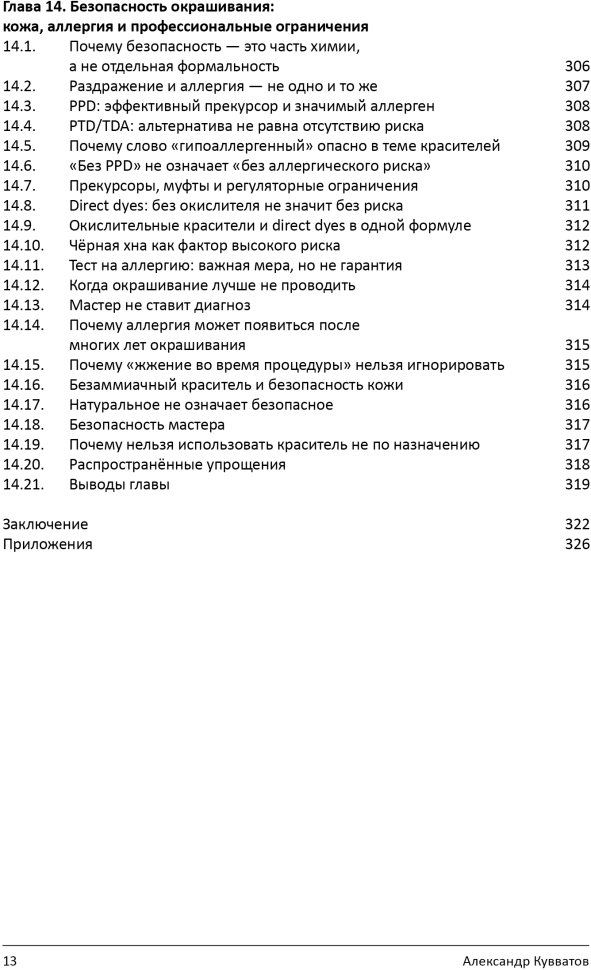
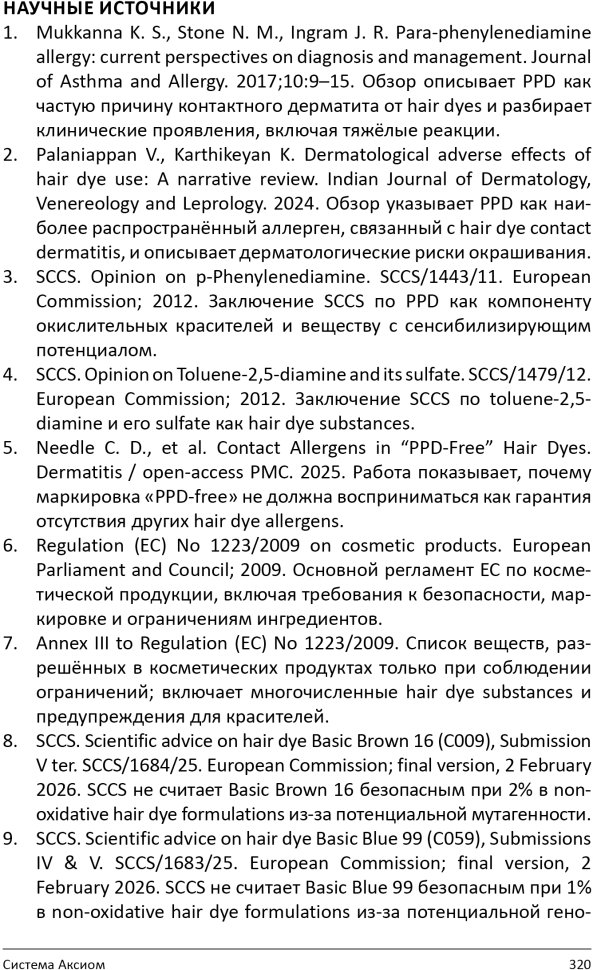
– security of coloring, allergic risks and professional restrictions.
For whom a textbook has been created
The book will be fine:
- barbers and colorists who want to understand their work more deeply;
- Masters with complex coloring, blonde, gray and color correction;
- Teachers who teach colors and want to give students a systemic explanation, not a myth;
- Technology and hair makeup producers;
- to masters who want to stop working "in habit" and start to understand why the formula works or doesn't work.
The book is different from the usual coloristics
Most coloring materials explain color through simplified circuits: "opened the cuticula", "pigmented", "screwed" and "neutralized the opposite color".
The book considers coloring more precisely as the interaction of hair structure, dye, developer, pH, time, background, porosity, direct pigments, and the previous hair history.
The book's mission is not to provide a set of ready recipes, but to form a stylist's chemical thinking, which helps to predict the result more accurately, to find the cause of the error faster, and to work with color consciously.
What will you understand after studying
After reading the book, you can understand better:
- why isn't hair a pier?
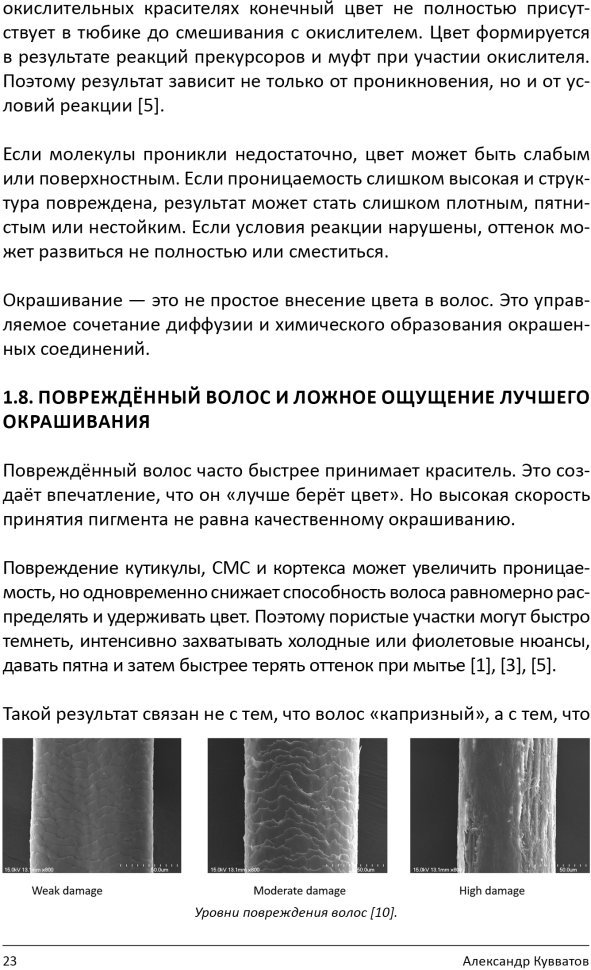
- Why the hair damage is faster to take color, but worse to hold it;
— Why the underlying lightening background is not just a pigment;
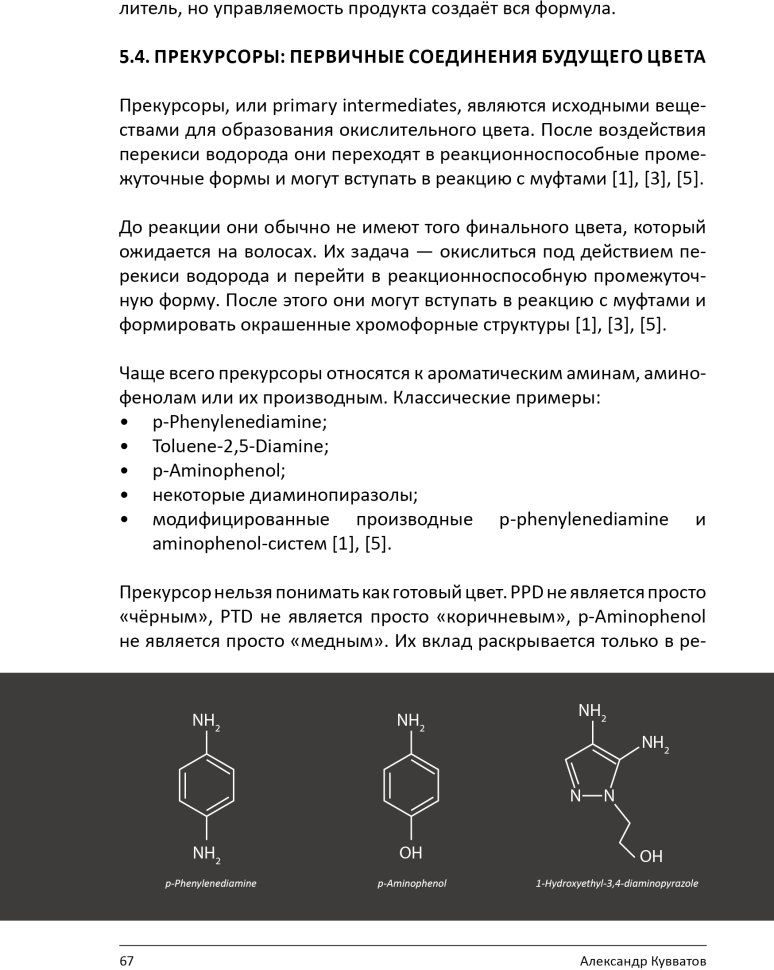
- Why the dye is not finished hair color in the tube;
- why pH affects not only the cuticle but also the reaction of the color formation;
- Why direct dies can behave differently than oxidative pigments;
- Why reductive color removal, powder and chelators do different tasks;
- why post-collarization is part of technology, not just "softness after procedure."
Important idea of the book
The color on the hair is not random; it is the result of chemistry, hair structure, optics, dye reaction and procedure.
When a stylist understands these processes, he stops just guessing the formula. He starts to see exactly where the error can occur: in the database, porosity, pH, developer, direct pigments, old color, metals, care or technology failure.
"Chemical chemistry" - It's a textbook for those who want to work with color professionally, deeply, and consciously.
The book will be suitable for professional training of hair professionals, dye chemistry, color, hair lightening, gray, straight pigments, pH, developers and color correction.
Technical Details
Current SKU specifications from the Webasyst catalog.
Net Weight | 800 g |
Product Dimensions | 260 x 160 x 30 mm |
Author | Alexander Kuvvatov |
Publishing | I.P. Kuvatov A.S. |
Date issued | 2022 |
Language | Russian |
Number of pages | 330 |
Type of publication | Bookinistic publication |
Pictures | Black and white |
Manufacturer | IP Kuvvatov Alexander Sergeievich |
Book Format | A5 |
Type of brook | BCF |
Brand-reference | None |
Special conditions | Only for professionals. |
Customer Reviews

Shipping
Available shipping methods, estimated delivery time, and cost are calculated from the delivery address and shown at checkout.
Payment
Available payment methods are shown at checkout and may depend on the selected shipping method. The order total is not changed without the customer’s confirmation.
Please support this: Help us find the instructions and specify the product characteristics.
+7 (916) 258-89-29